
Sentra
A design-driven approach to expanded auditory perception.
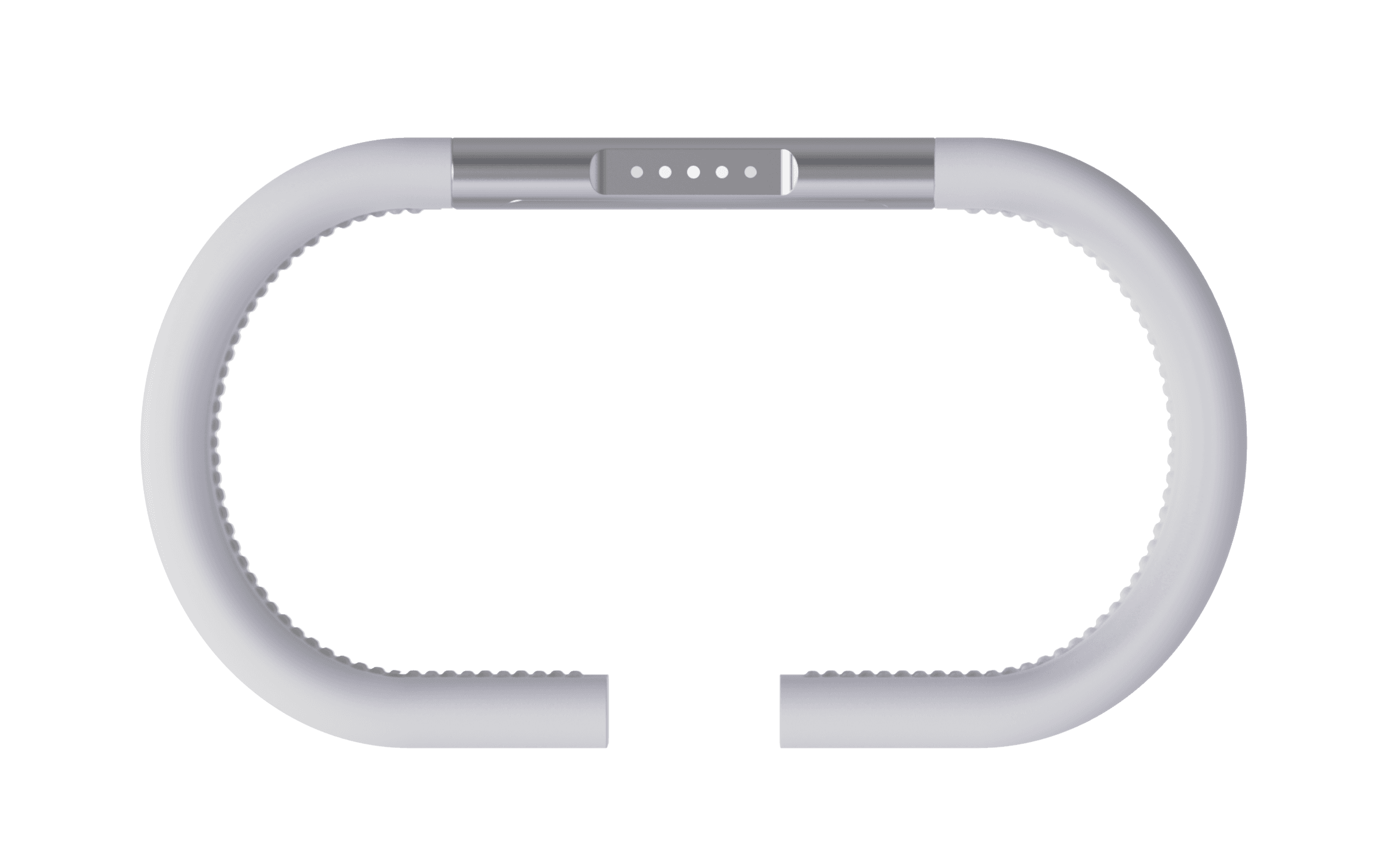
This project explores how spatial hearing can be supported beyond purely acoustic means through a wrist-worn haptic system developed as a fifth-semester design study.
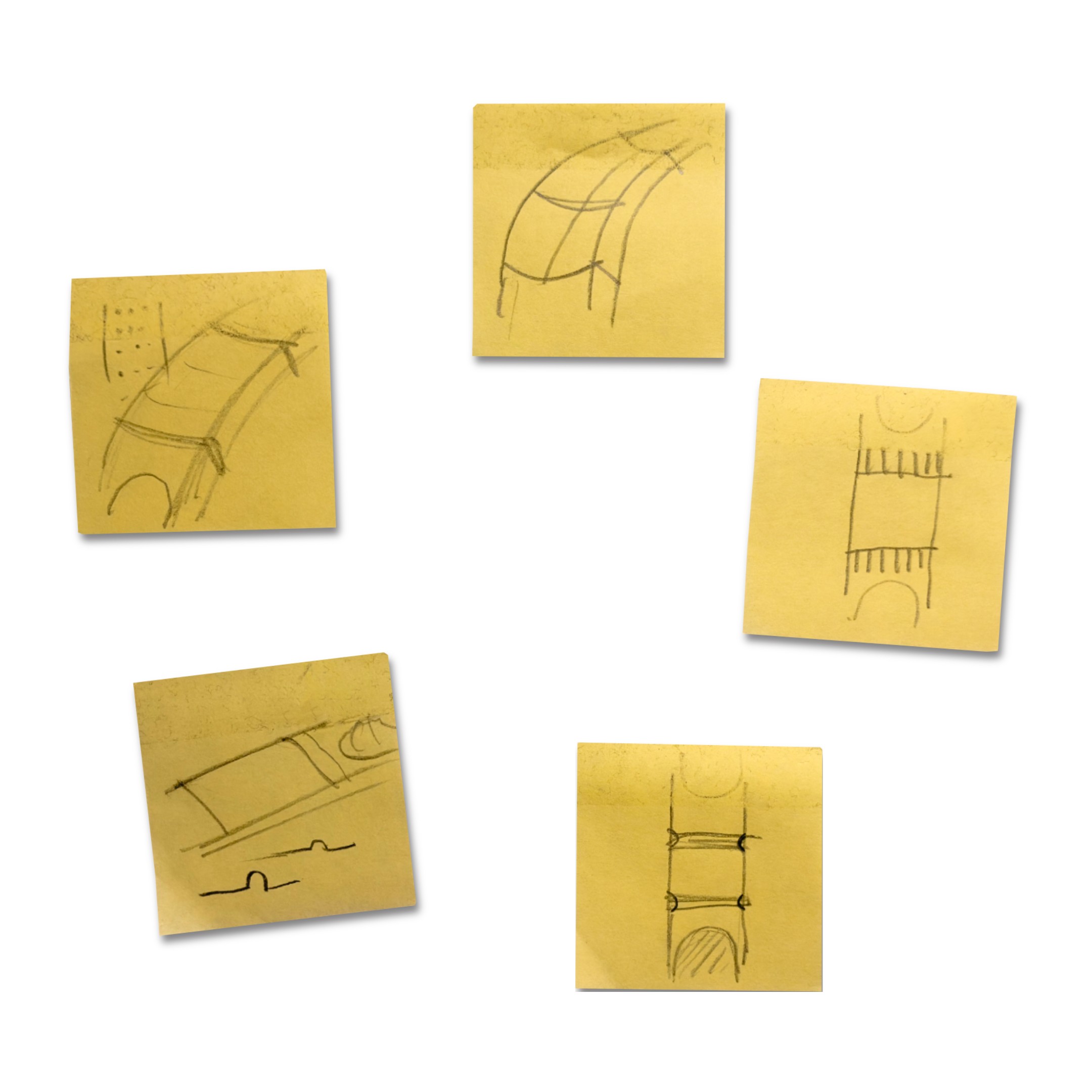
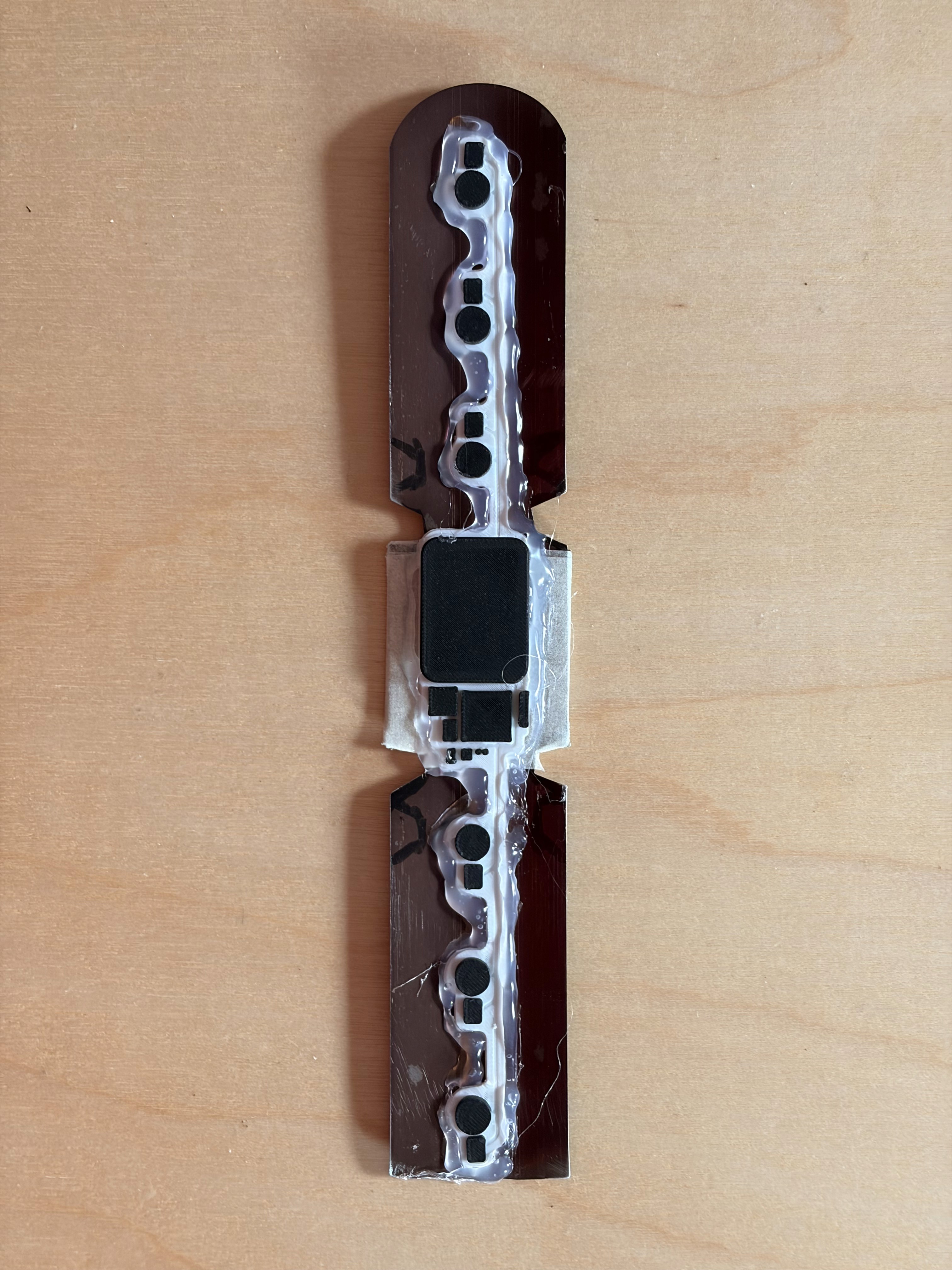
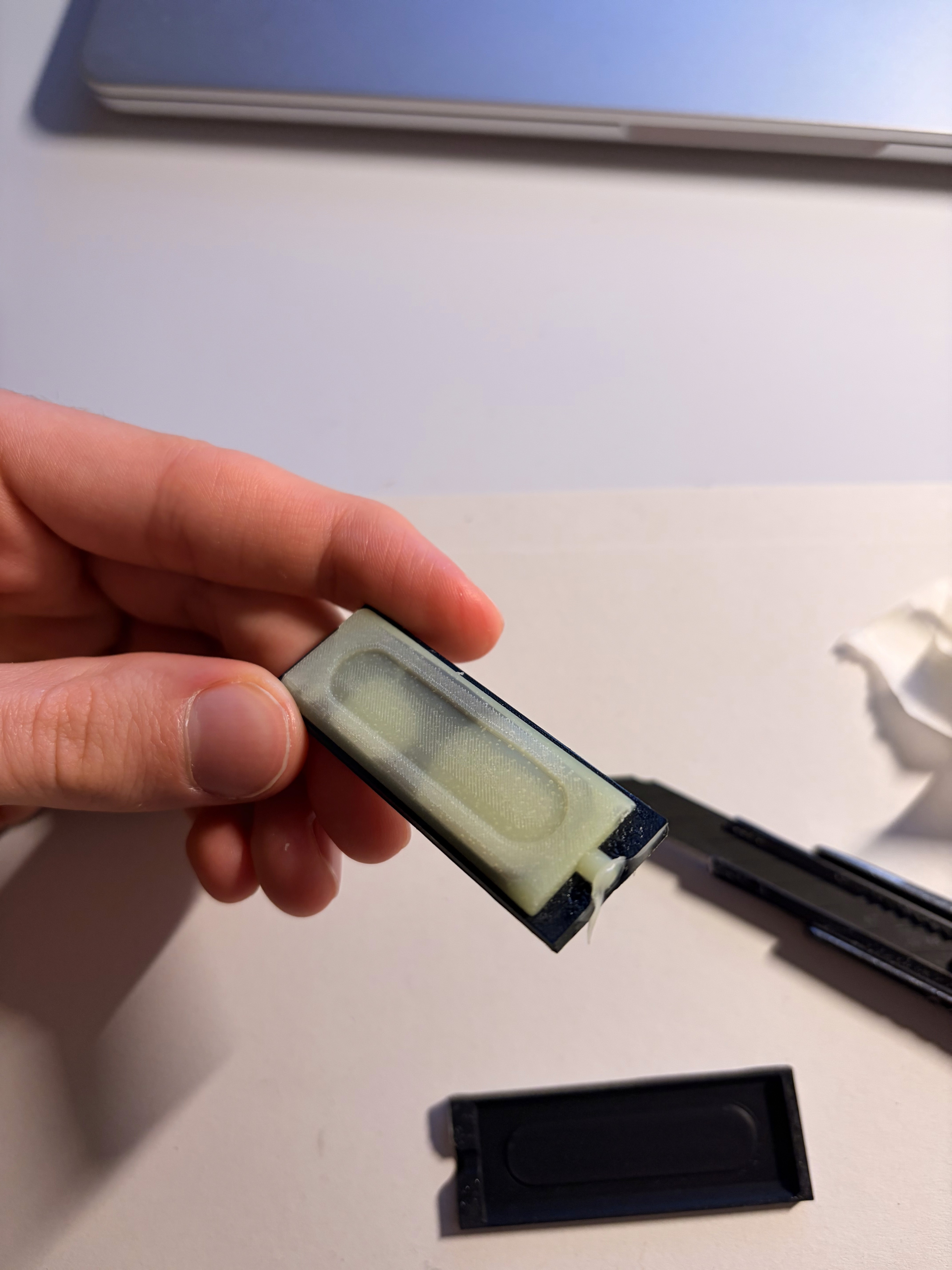
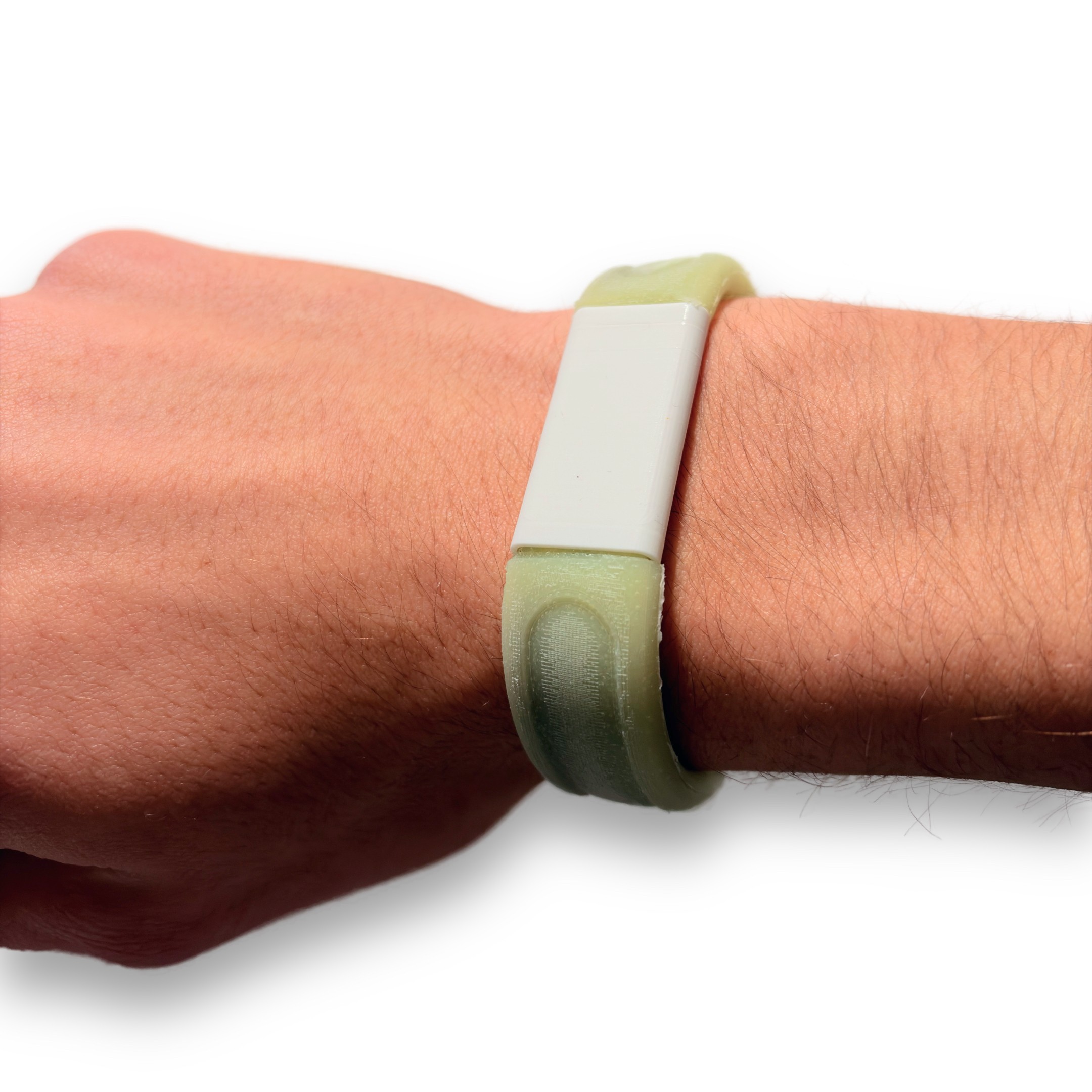
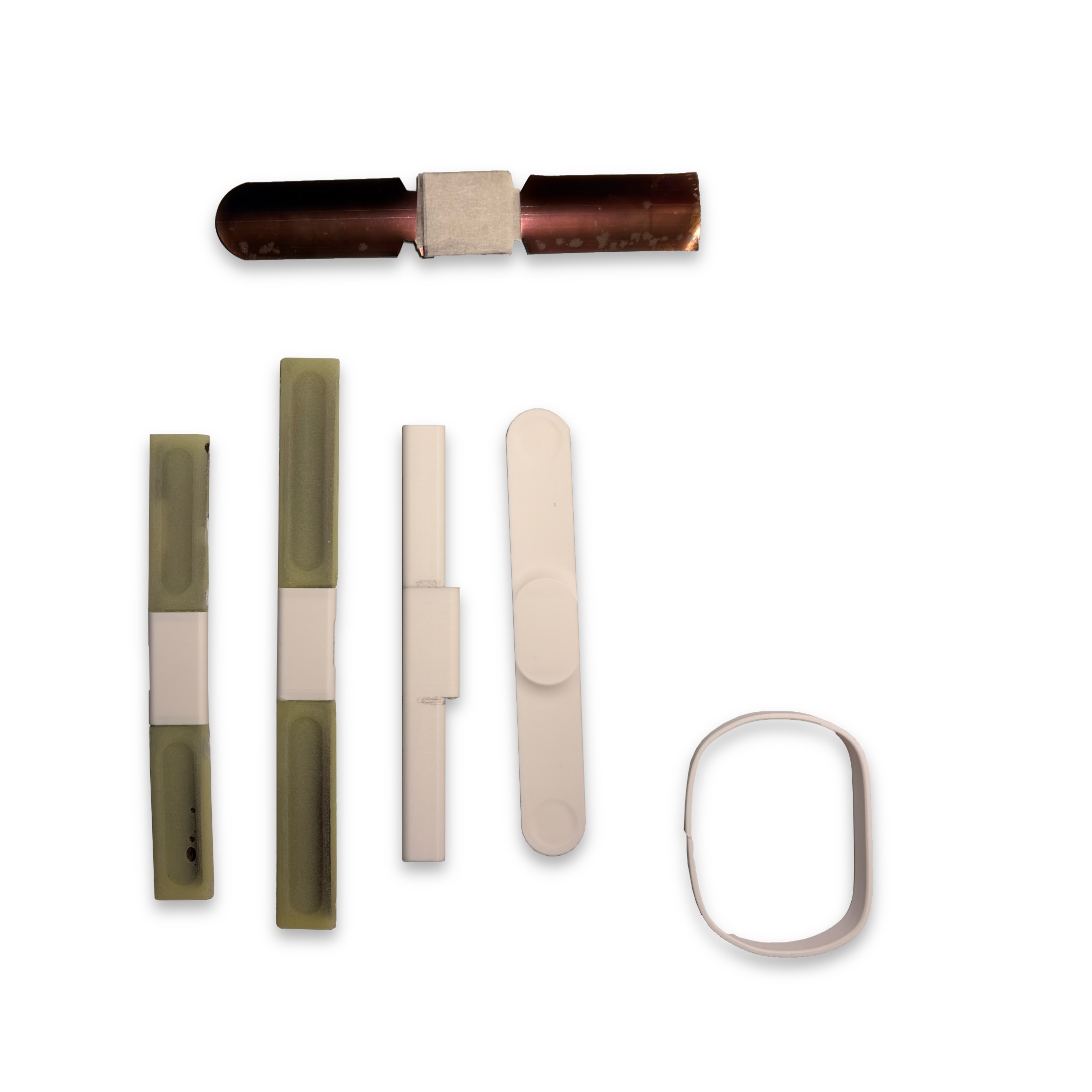
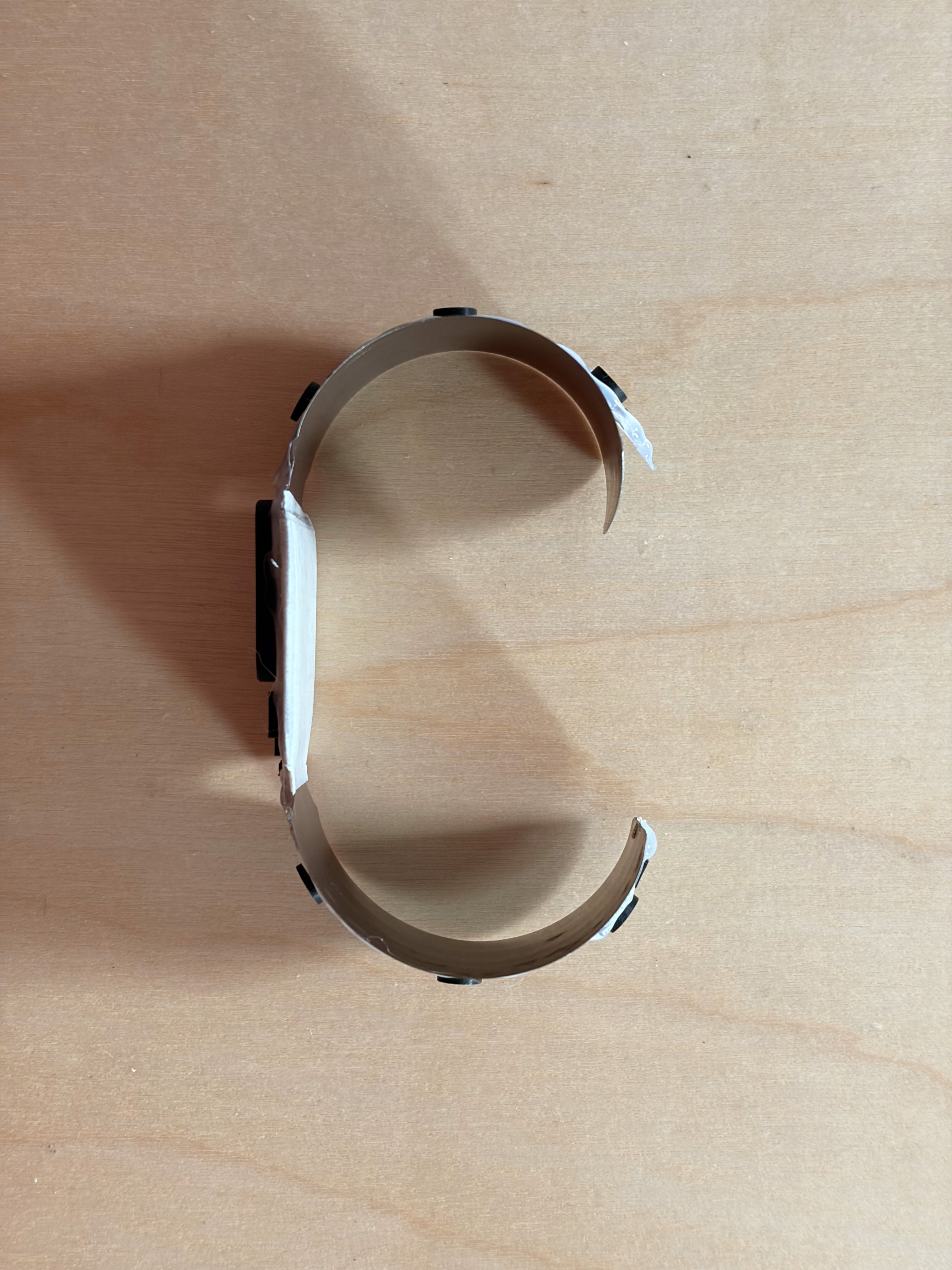
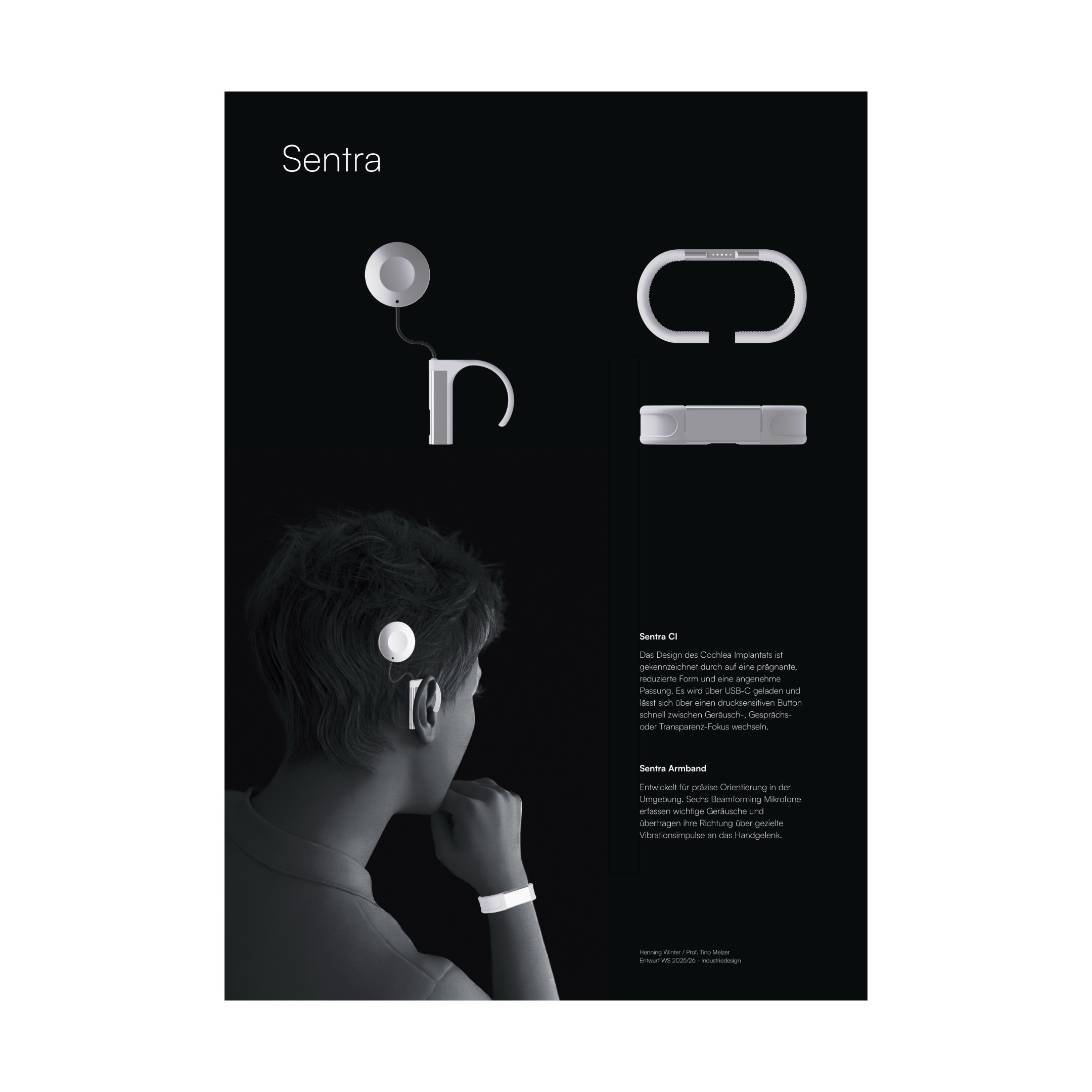
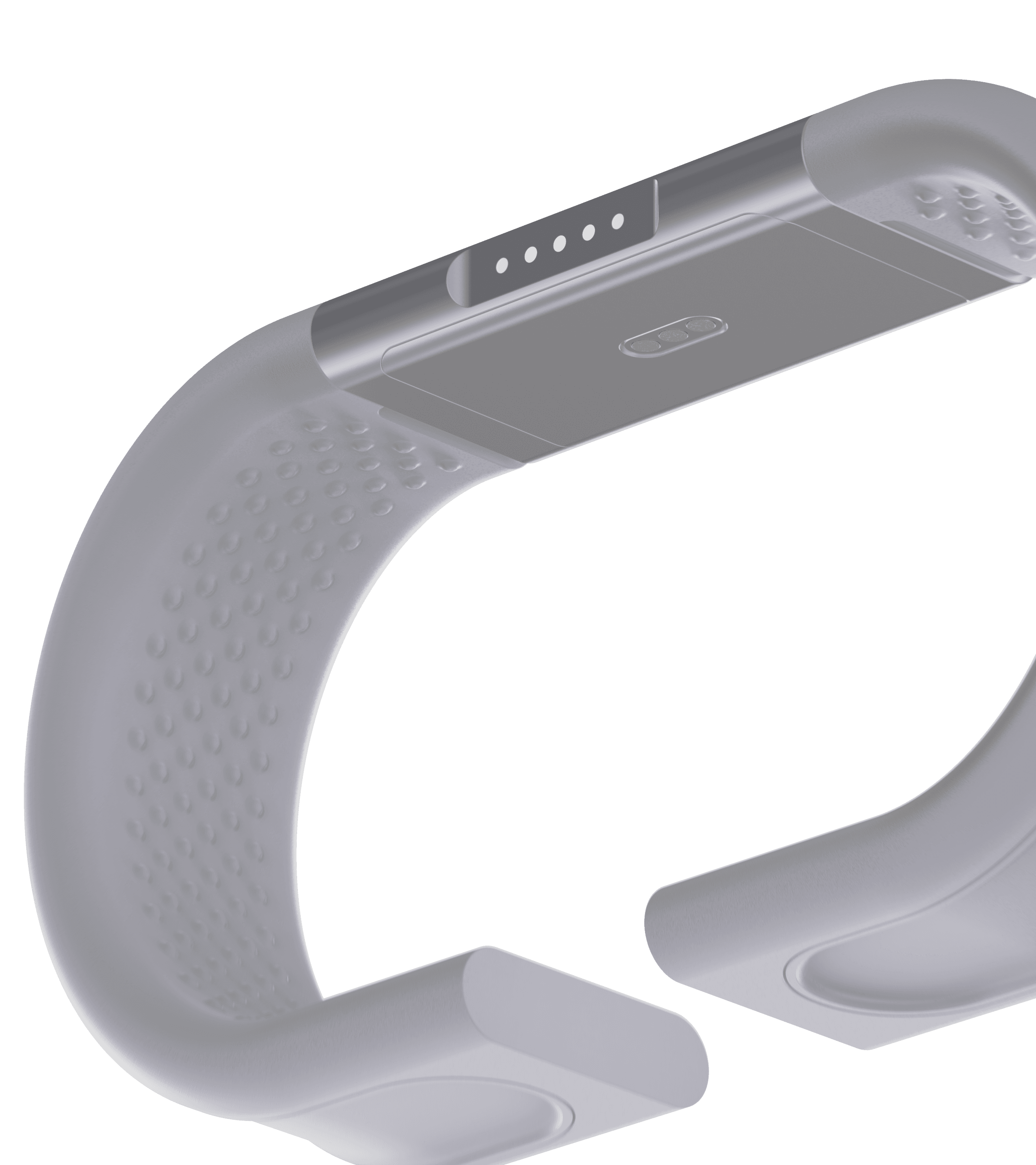
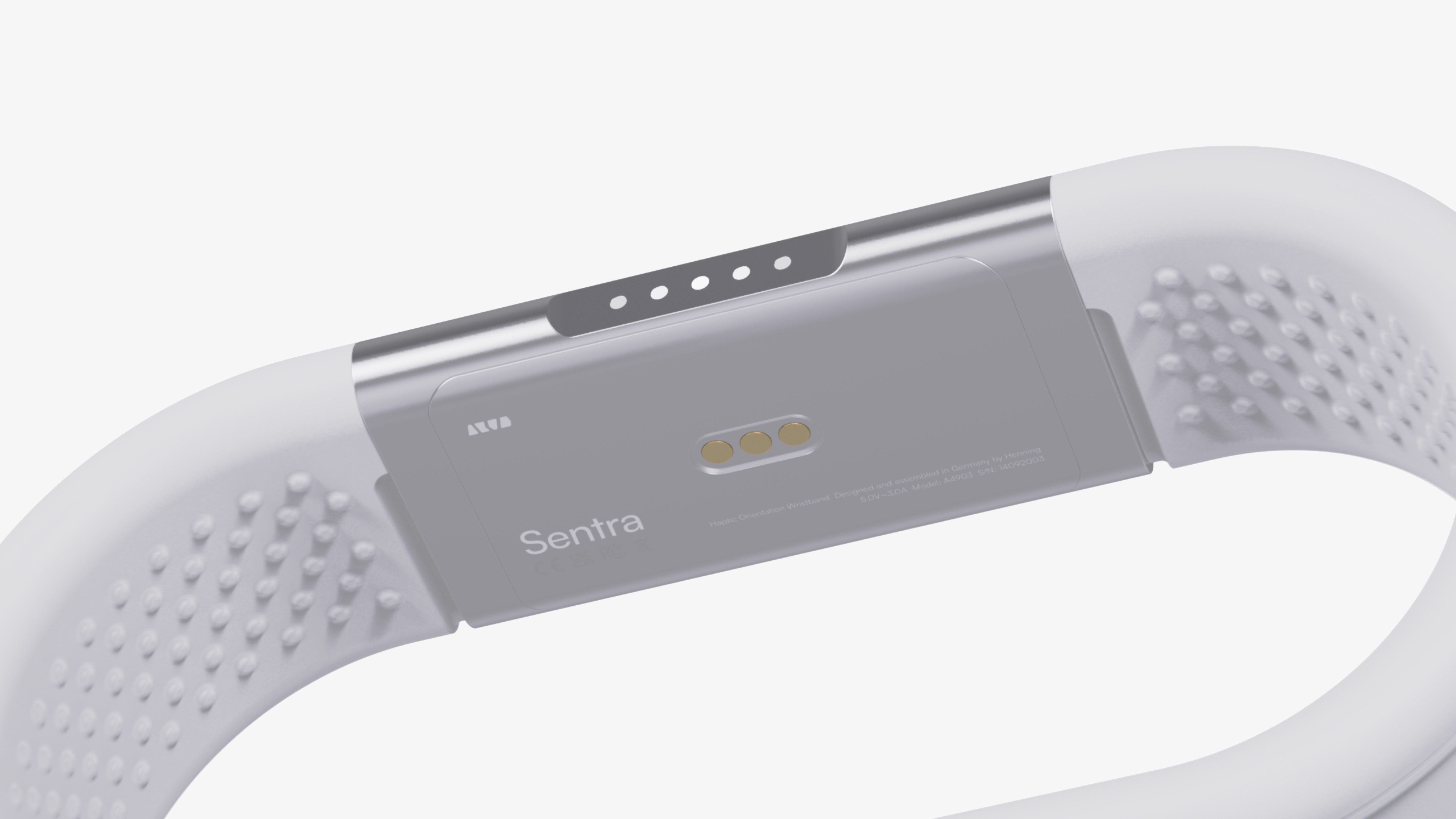
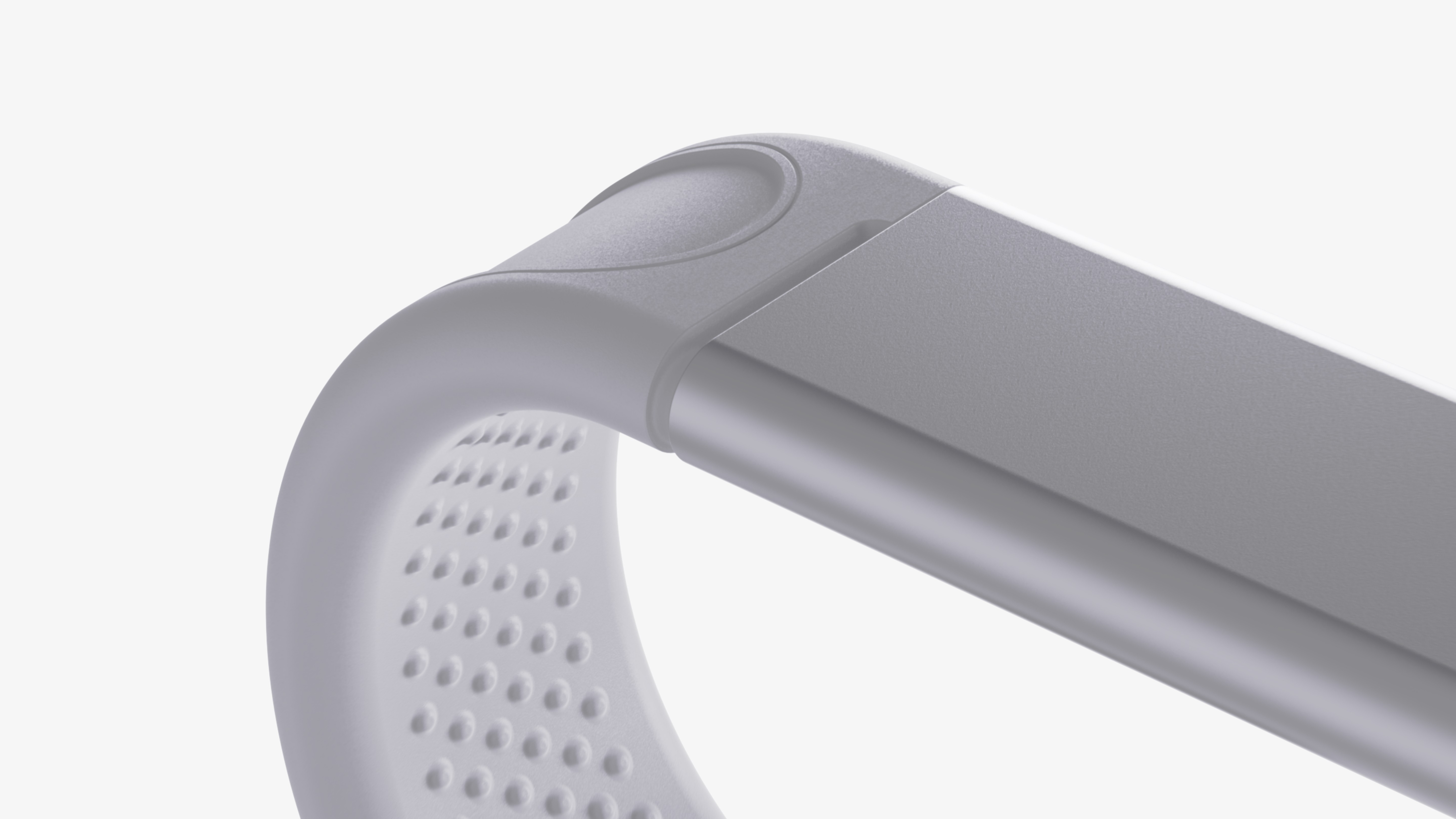
At the core of the project is a wearable haptic bracelet designed to translate sound direction into tactile feedback. Equipped with multiple microphones and vibration motors arranged circumferentially around the wrist, the device detects sound events and their spatial origin. Instead of amplifying sound, it communicates direction through localized vibration, allowing users to intuitively sense where relevant sounds are coming from. The bracelet operates as a subtle background system, supporting orientation especially in acoustically complex environments.
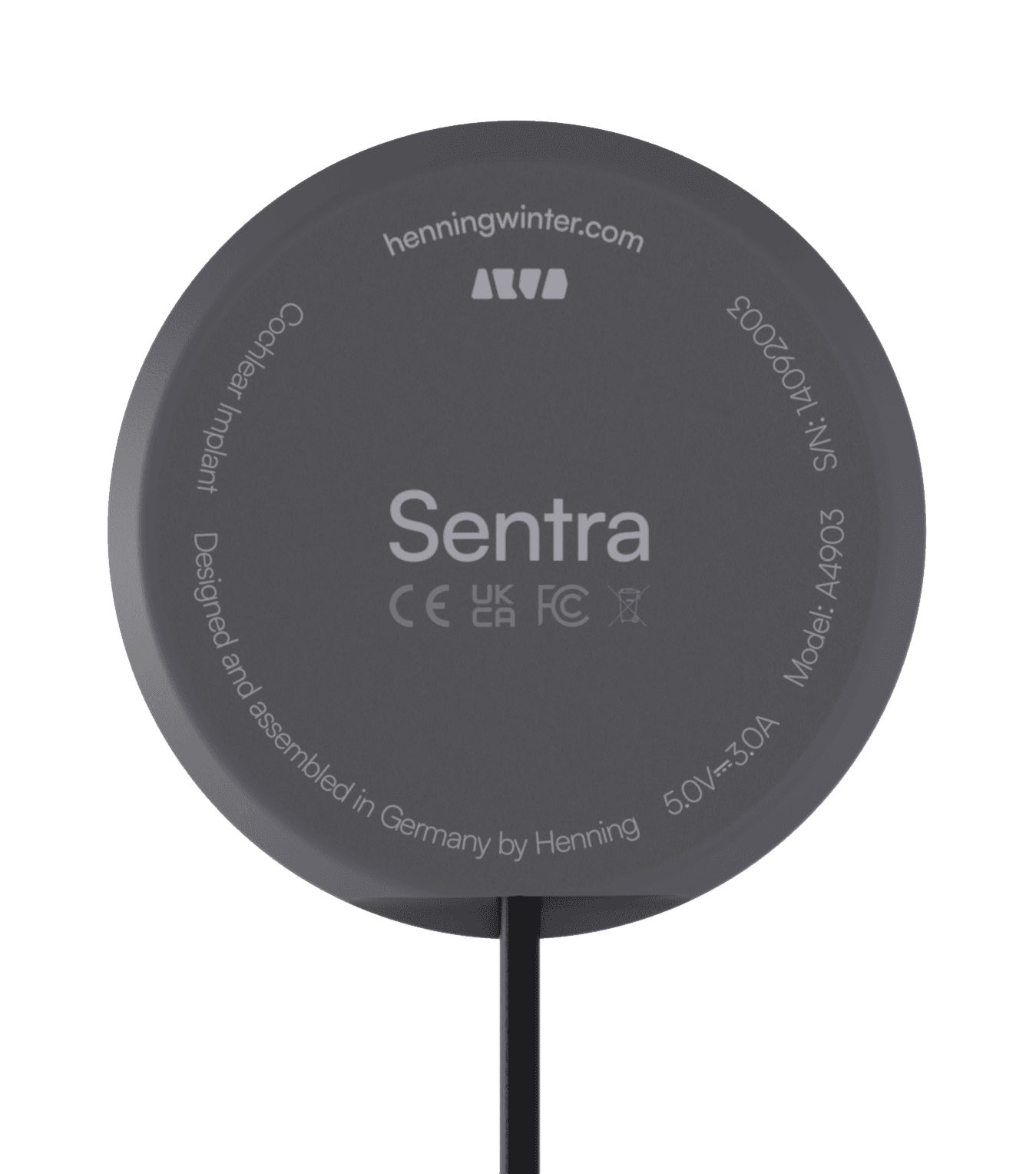
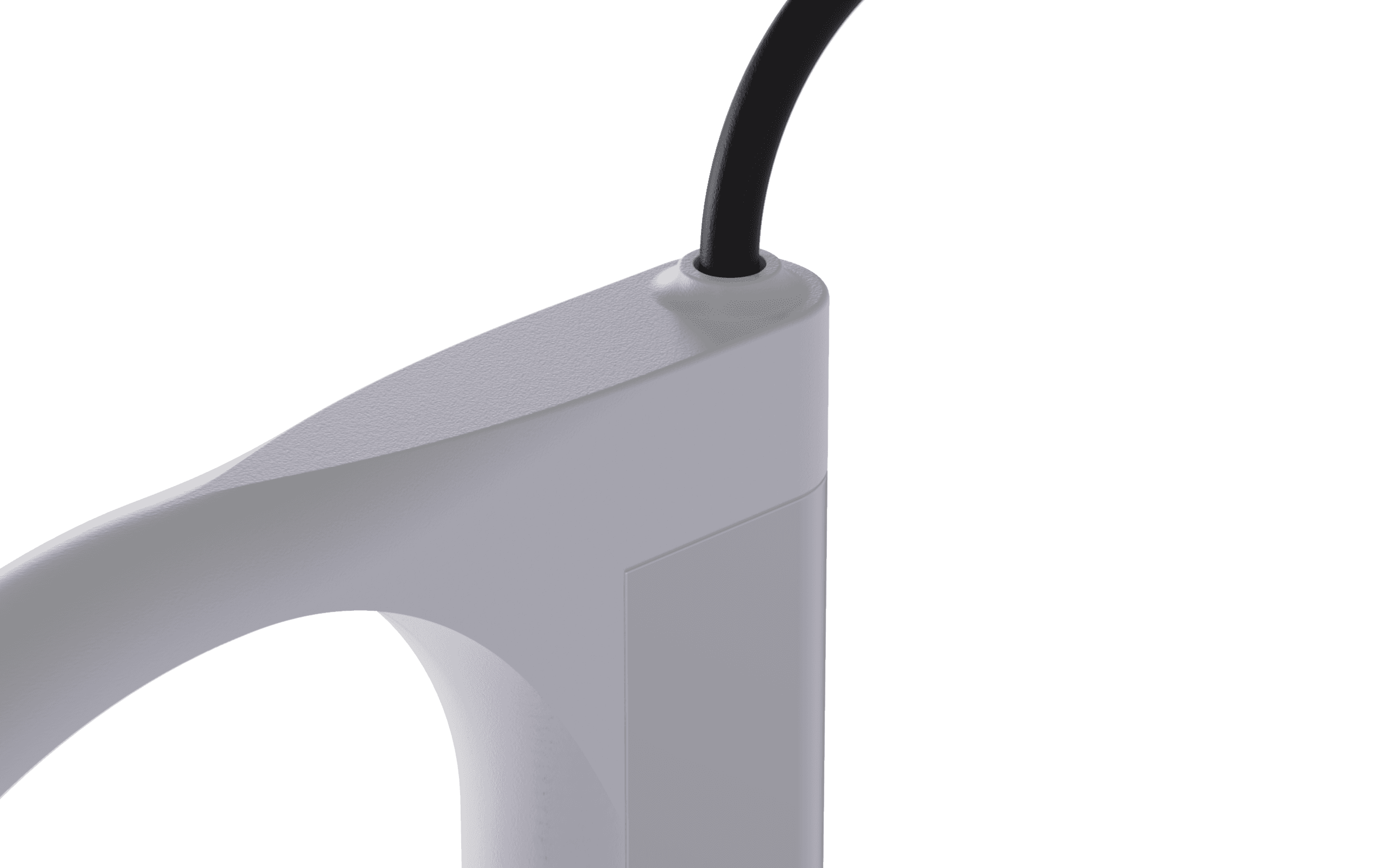
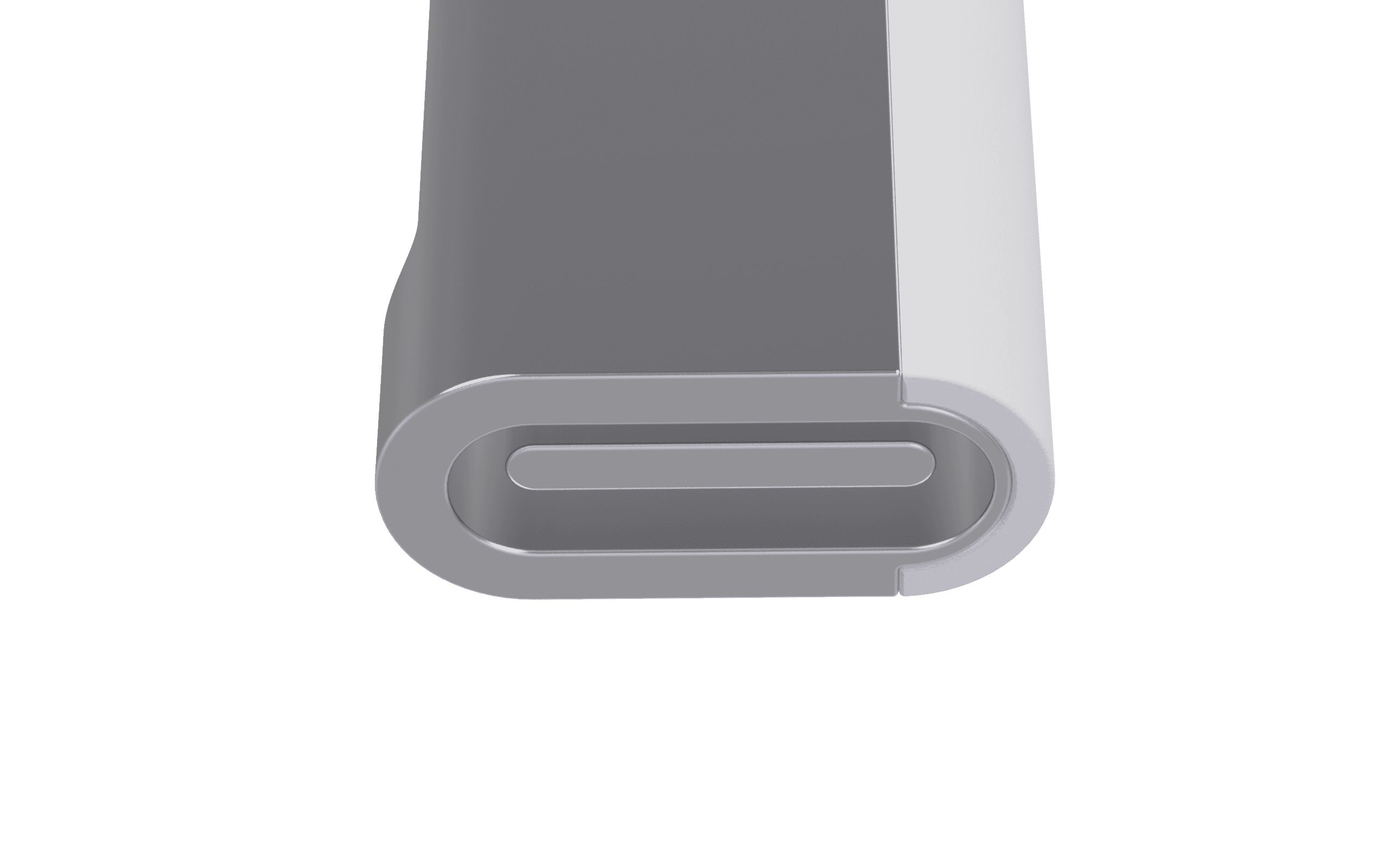
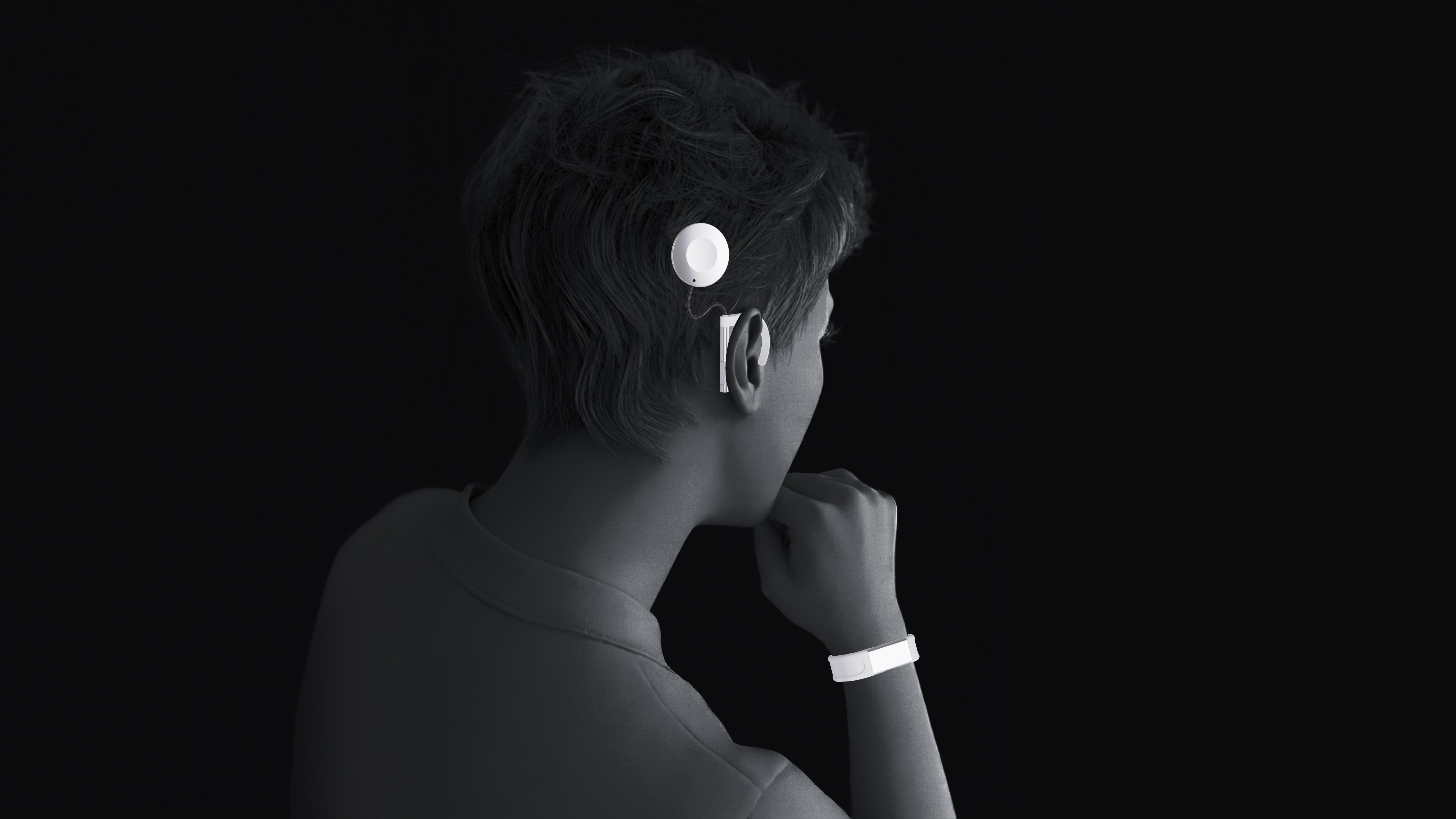
Building on this haptic perception concept, the project was later extended to include a reinterpretation of the Cochlea Implant. A Cochlea Implant, often abbreviated as CI, is a neuroprosthetic device that enables people with severe to profound hearing loss to perceive sound by electrically stimulating the auditory nerve. Rather than rethinking the underlying technology, the CI was redesigned using the same visual language and design principles developed for the bracelet.
The goal was to shift both devices away from a purely medical appearance toward a contemporary, wearable system that integrates naturally with the body. Emphasis was placed on clarity, reduction, and material quality, positioning the CI not as something to be hidden or highlighted, but as a calm and accepted part of everyday life.
Together, the haptic bracelet and the Cochlea Implant form a complementary system: the CI remains the primary auditory interface, while the wrist-based haptic device offers an additional layer of spatial awareness in situations where directional hearing is limited or the CI is not sufficient. The project proposes a multisensory approach to hearing that values perception, orientation, and dignity equally.